
Over 90 percent of american homes rely on HVAC systems for comfort, yet surprising misconceptions still shape most purchase and installation decisions. Choosing how to heat or cool your space can feel confusing, with so much conflicting advice and technical detail to consider. Understanding what really matters in HVAC installation saves time, money, and prevents costly mistakes, whether you are a homeowner or managing a business.
Table of Contents
- Defining HVAC Installation And Misconceptions
- Residential vs Commercial HVAC System Types
- Step‑by‑Step HVAC Installation Process
- Permits And Code Compliance In Los Angeles
- Costs, Risks And Contractor Responsibilities
Key Takeaways
| Point | Details |
|---|---|
| Understanding HVAC Complexity | HVAC systems are not one-size-fits-all; they require tailored configurations based on specific environmental needs. |
| Installation Process Importance | Proper HVAC installation is critical, as careful planning and professional expertise significantly affect system performance and energy efficiency. |
| Regulatory Compliance in Los Angeles | Strict adherence to local and state regulations is essential for HVAC installations to ensure energy efficiency and compliance with building codes. |
| Contractor Accountability | Contractors are responsible for meeting stringent energy standards, thus ensuring long-term system reliability and minimizing risks associated with poor installations. |
Defining HVAC Installation And Misconceptions
HVAC installation is a complex process involving the strategic placement and setup of heating, ventilation, and air conditioning systems designed to maintain optimal indoor comfort and air quality. According to Energy.gov, an HVAC system provides critical environmental control within residential and commercial spaces, regulating temperature, humidity, and air circulation.
Contrary to popular belief, HVAC systems are not one-size-fits-all solutions. As SJVC explains, these systems come in diverse configurations like split systems, package systems, and ductless mini-split systems, each engineered to address specific spatial and functional requirements. Misconceptions about HVAC installations often lead homeowners to make uninformed decisions that can impact long-term comfort and energy efficiency.
Key misconceptions surrounding HVAC installations include:
- Believing all systems perform identically
- Assuming installation is a simple, quick process
- Thinking any contractor can handle complex HVAC setups
- Underestimating the importance of proper sizing and load calculations
Professional air conditioner installation requires technical expertise, precise measurements, and an understanding of your specific environmental needs. The right installation can significantly impact system performance, energy consumption, and overall home comfort.
Residential vs Commercial HVAC System Types
HVAC systems are far from uniform, with distinct differences between residential and commercial applications that impact design, functionality, and installation complexity. According to HVAC Classes, residential HVAC systems are typically smaller and designed for single-family homes, focusing on heating and cooling individual living spaces, while commercial systems are significantly larger and more intricate.
The fundamental distinctions extend beyond mere size. Residential HVAC systems are generally standardized, utilizing common household brands and focusing on consistent comfort for a single living environment. In contrast, ICT highlights that commercial HVAC systems are modular and highly customizable, allowing for scalable solutions that can adapt to complex building layouts and diverse operational requirements.
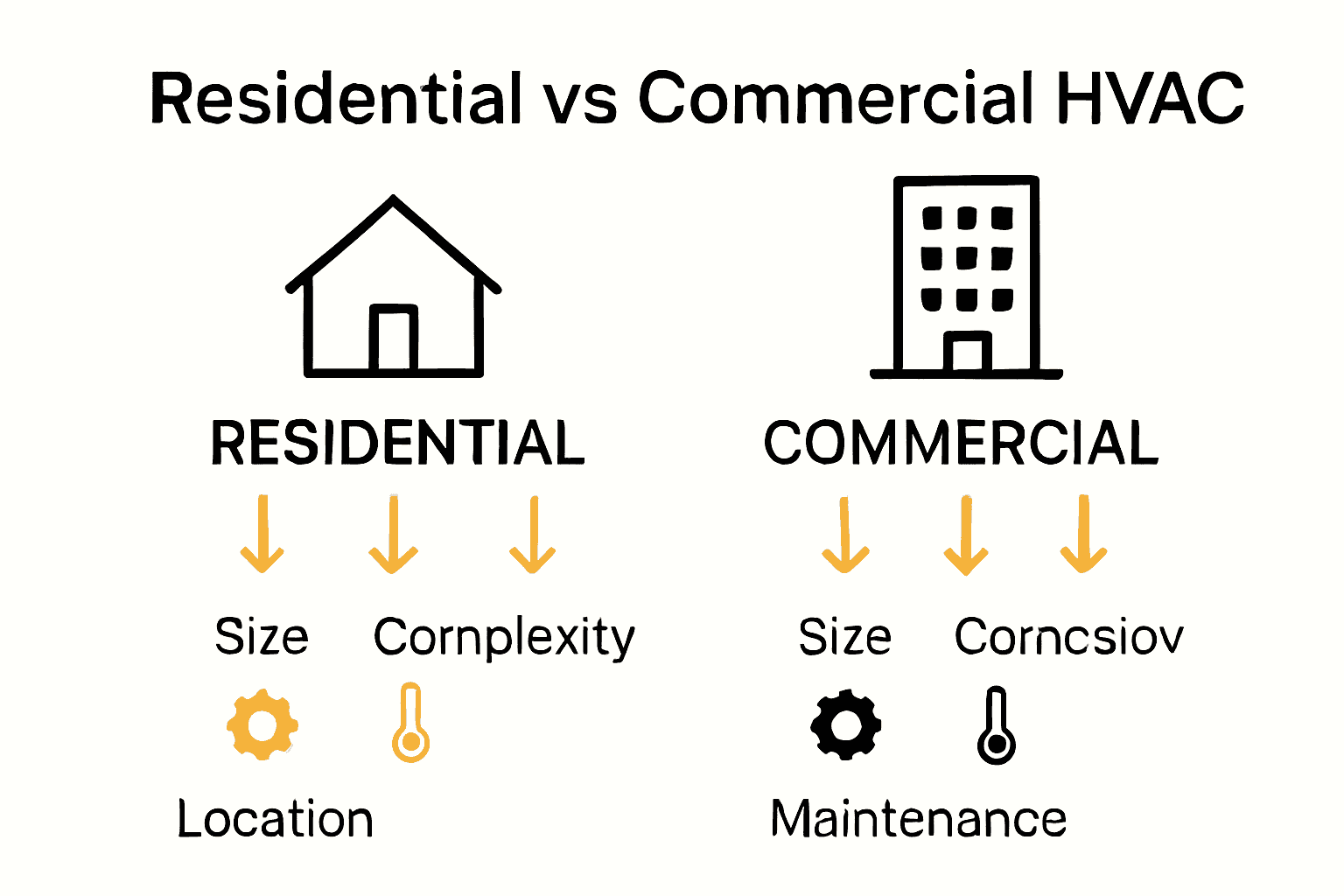
Key differences between residential and commercial HVAC systems include:
- System Size: Residential systems are compact; commercial systems are expansive
- Complexity: Home systems have simpler controls; commercial systems feature advanced zoning and management technologies
- Placement: Residential units are typically ground-level or roof-mounted; commercial systems often utilize extensive rooftop or dedicated mechanical room installations
- Maintenance: Commercial systems require more frequent and specialized maintenance
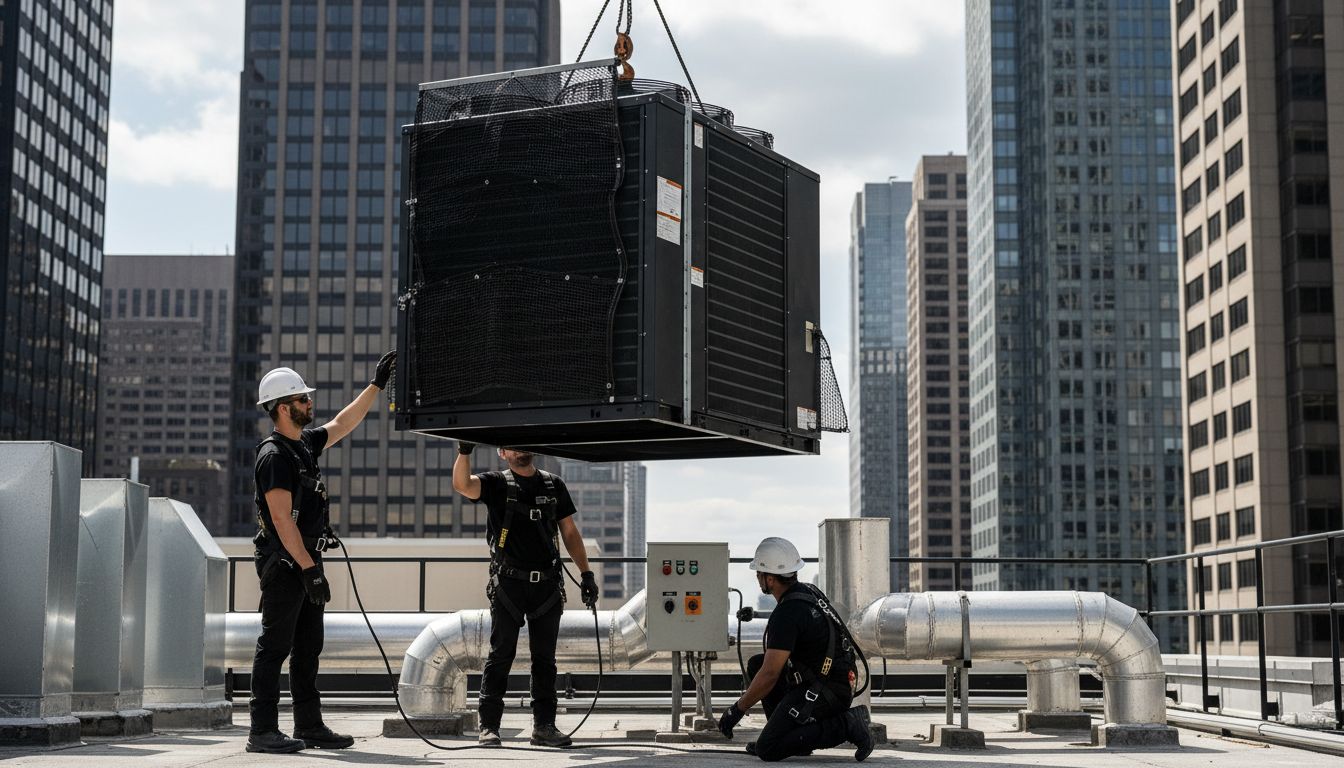
For businesses seeking specialized climate control solutions, commercial HVAC services offer tailored approaches that address unique spatial and operational challenges, ensuring optimal performance and energy efficiency across diverse commercial environments.
Step‑by‑Step HVAC Installation Process
Installing an HVAC system is a meticulous process that requires careful planning, professional expertise, and precise execution. While every installation is unique, most follow a structured approach that ensures optimal performance, energy efficiency, and long-term reliability. System assessment serves as the critical first step, where HVAC professionals evaluate your specific space, cooling and heating requirements, and existing infrastructure.
The comprehensive installation process typically involves several key stages that demand technical skill and strategic implementation. Before any physical work begins, technicians conduct a detailed load calculation to determine the appropriate system size and capacity. This calculation takes into account factors like square footage, insulation quality, window placement, local climate conditions, and specific room-by-room temperature control needs.
Step-by-step HVAC installation typically includes:
- Initial site assessment and load calculation
- Equipment selection matching specific requirements
- Preparing installation area and removing old system (if applicable)
- Installing primary HVAC components
- Connecting electrical systems and ductwork
- Refrigerant line installation
- System testing and calibration
- Final inspection and performance verification
For homeowners seeking specialized guidance, HVAC duct installation services provide critical insights into ensuring proper airflow, system efficiency, and optimal indoor comfort. Professional installation minimizes potential issues and maximizes the long-term performance of your heating and cooling infrastructure.
Permits And Code Compliance In Los Angeles
Navigating the complex landscape of HVAC permits and code compliance in Los Angeles requires meticulous attention to detail and comprehensive understanding of local and state regulations. According to Energy.gov, installing HVAC systems demands strict adherence to federal and state performance requirements, particularly those specific to climate and energy efficiency standards.
Permit requirements in Los Angeles are particularly stringent, reflecting California’s commitment to energy conservation and environmental sustainability. Energy California mandates that all HVAC installations must comply with the Building Energy Efficiency Standards, ensuring optimal thermal comfort, improved indoor air quality, and reduced energy consumption.
Key compliance considerations for Los Angeles HVAC installations include:
- Obtaining proper municipal permits before commencing installation
- Ensuring systems meet California Energy Code specifications
- Conducting required energy efficiency calculations
- Scheduling mandatory inspections by city building officials
- Documenting all modifications and installations
- Maintaining detailed system performance records
- Verifying contractor licensing and insurance credentials
For homeowners seeking professional guidance through this complex process, HVAC company resources can provide critical insights into navigating local regulatory requirements and ensuring full compliance with Los Angeles building codes.
Costs, Risks And Contractor Responsibilities
HVAC installation represents a significant investment with complex financial and operational implications that extend far beyond the initial purchase price. According to Energy.gov, contractors bear critical responsibilities in selecting and installing equipment that meets stringent energy efficiency standards while considering climate-specific performance requirements.
Contractor accountability involves a comprehensive approach to minimizing potential risks and ensuring long-term system reliability. Energy Efficiency Resource highlights that improper installation can lead to multiple downstream challenges, including increased electric peak demand, compromised part-load performance, and significantly reduced equipment lifespan.
Key cost and risk considerations include:
- Initial equipment and installation expenses
- Long-term energy consumption projections
- Potential system efficiency degradation
- Maintenance and repair potential
- Performance reliability under varying environmental conditions
- Warranty coverage and terms
- Potential financial impacts of system underperformance
Homeowners seeking to mitigate installation risks can leverage heating and cooling repair services to ensure professional oversight and comprehensive system evaluation, ultimately protecting their significant HVAC investment.
Take Control of Your HVAC Installation with Trusted Local Experts
Installing an HVAC system goes beyond selecting equipment. The article highlights the complexity of professional installation, proper sizing, compliance with Los Angeles codes, and contractor responsibilities—all critical factors for reliable, energy-efficient comfort. If you are facing concerns about navigating permits or want to avoid costly mistakes from improper installation, you are not alone. Many homeowners and business owners feel overwhelmed by the technical and regulatory challenges in achieving optimal heating and cooling performance.
Do not let installation worries affect your comfort and budget. At airconditioning-heating.com, we connect you with licensed local contractors who specialize in expert air conditioner installation and comprehensive HVAC services. Our trusted professionals understand Los Angeles permit requirements and offer solutions tailored to your unique space, ensuring your system runs efficiently and reliably.

Ready to enjoy peace of mind with a perfectly installed HVAC system? Visit airconditioning-heating.com today and take the first step toward professional assistance. Whether you need residential or commercial HVAC installation or duct services, our platform makes it easy to find qualified experts who prioritize your comfort and long-term savings.
Frequently Asked Questions
What is HVAC installation?
HVAC installation refers to the complex process of setting up heating, ventilation, and air conditioning systems designed to optimize indoor comfort and air quality.
What are the common misconceptions about HVAC systems?
Common misconceptions include the belief that all systems perform the same, that installation is quick and simple, and that any contractor can handle intricate HVAC setups without proper expertise.
How does the HVAC installation process work?
The HVAC installation process typically involves a site assessment, load calculations, selecting the right equipment, installing components, connecting systems, and performing testing and calibration to ensure optimal performance.
Why is proper sizing important in HVAC installation?
Proper sizing is crucial because it affects the system’s efficiency, energy consumption, and overall performance. Incorrect sizing can lead to inefficient heating or cooling, increased wear on components, and higher energy bills.
Recommended
- #1 Air Conditioning Installation 91302 | HVAC Pros | 877-999-0253
- #1 Air Conditioner Installation 91302 | HVAC Pros | 877-999-0253
- #1 Best HVAC Service 91303 | HVAC Pros | 877-999-0253
- #1 24 Hour HVAC Service 91304 | HVAC Pros | 877-999-0253
- Boiler Installation Checklist for Safe and Efficient Setup – Skan Plumbing & Heating
- Essential Heat Pump Installation Steps for Homeowners – Skan Plumbing & Heating

