
If your outdoor AC fan won’t spin, the culprit is almost always a tripped breaker, a failed run capacitor, a seized or burnt-out motor, or debris jamming the blades. Turn the system off at the thermostat right away if the fan has stopped but the unit is still running otherwise. Letting the compressor run without fan support can cause serious, expensive damage in a matter of minutes. Work through the checklist below before touching anything electrical.
TL;DR:
- Repeated breaker trips often indicate a short or excessive current draw from a failed motor winding or capacitor, requiring professional attention.
- A faulty run capacitor is the most common cause of an outdoor fan not spinning, even if the system hums, and can often be diagnosed with a capacitance test.
- Running the AC without a functioning fan risks damaging the compressor or fan motor, especially if the capacitor or motor is already compromised.
- Regular maintenance, including cleaning filters and scheduling annual tune-ups, can prevent most fan failures caused by debris, dirt, or aging components.
- Immediate professional diagnosis is necessary if the outdoor fan is silent while the compressor runs, a strong burning smell is present, or scorch marks and arcing are visible.
Table of Contents
- AC Fan Not Spinning: A 10-Minute Safety Checklist
- Outside AC Fan Not Working: Troubleshooting By Cause
- How Do You Tell If It’s the Capacitor or the Motor?
- When Should You Call a Licensed HVAC Technician?
- Preventive Maintenance That Keeps the Fan Running
- Why This Matters More Than It Looks Like
- Get a Licensed HVAC Pro to Diagnose Your Fan Today
- Sources
- FAQ
AC Fan Not Spinning: A 10-Minute Safety Checklist
Before assuming the worst, rule out the simple stuff. Most of these checks take less time than a coffee break.
- Confirm the thermostat is set to “cool,” the fan to “auto,” and the target temperature is at least a few degrees below room temperature.
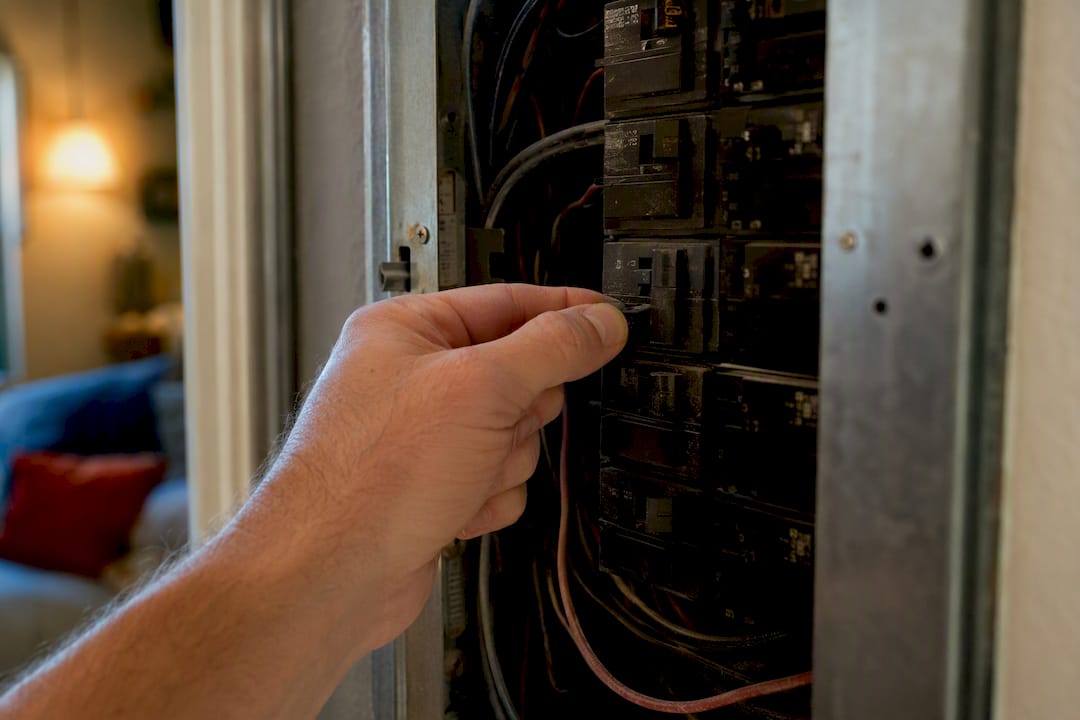
- Check your electrical panel for a tripped breaker and the outdoor disconnect box for a blown fuse; reset once, but don’t force a breaker that trips again immediately.
- Cut power to the outdoor unit before inspecting it, then look for leaves, grass clippings, or a fallen branch jamming the fan blades.
- Listen closely. A hum with no spin usually points to a capacitor or contactor problem, not a dead motor.
If you smell burning plastic or see scorch marks near the disconnect, stop immediately and call a technician. That’s not a DIY situation under any circumstance.
Pro Tip: Snap a photo of your outdoor unit’s model and serial number plate now, before anything fails further. Technicians ask for this every time, and having it ready shaves real time off a service call.
A repeated breaker trip is one of the clearest signs something downstream, like a shorted motor winding, is pulling too much current. Don’t keep resetting it hoping it sticks.
Outside AC Fan Not Working: Troubleshooting By Cause
Once you’ve ruled out the obvious, work through these six causes in order. Each one has a distinct signature.
- Tripped breaker or blown fuse. Locate the dedicated AC breaker, switch it fully off then back on. If it trips again within seconds, leave it off and call a pro. Repeated tripping means a short somewhere in the system, not a fluke.
- Failed run capacitor. This is the single most common reason for an AC fan not spinning while the unit otherwise powers on and hums. The compressor may still run, but the fan sits still or spins weakly.
- Contactor or wiring damage. Look for pitted, burnt, or stuck contacts, or evidence of ants and debris bridging the electrical contacts (a surprisingly common issue in outdoor units). Arcing marks mean it’s time for an electrician or HVAC tech, not a screwdriver.
- Fan motor failure. With powerfully off at the breaker, try turning the fan blade by hand. If it won’t budge, bearings have likely seized. If it spins freely but the motor won’t start electrically, the capacitor or contactor is the more probable culprit, not the motor itself.
- Mechanical obstruction or bent blades. Bent fan blades from storm debris or a fallen limb create a scraping or grinding sound and can throw the fan off balance enough to stall it.
- Frozen evaporator coil. A restricted filter or low refrigerant can ice over the indoor coil, which sometimes shuts down the whole system, including the outdoor fan, through a safety switch. You’ll usually notice weak airflow or actual ice on the indoor unit before the outdoor fan quits.
Pro Tip: If the blade spins freely by hand but the motor hums and stalls electrically, don’t replace the motor first. That symptom almost always means the capacitor, and swapping a $20 part beats a $400 motor replacement guess.
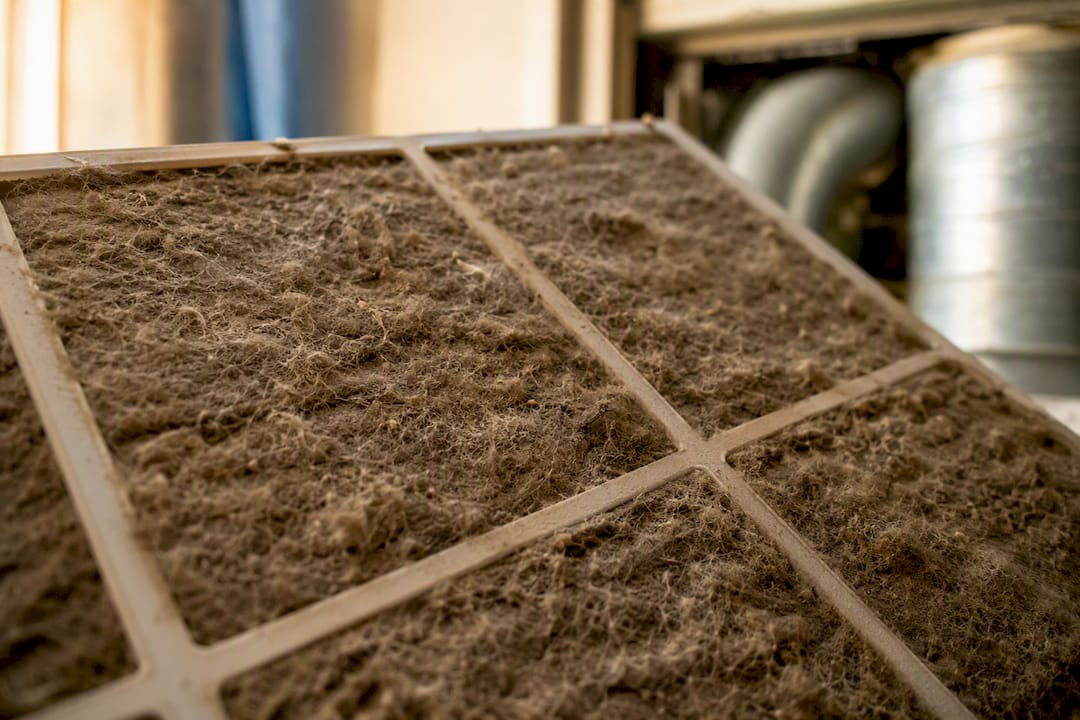
Clogged filters deserve special attention here. A dirty filter chokes airflow, freezes the coil, and eventually stresses the compressor and fan motor together, which is why Carrier lists it among the leading root causes of fan failure rather than a rare fluke.
How Do You Tell If It’s the Capacitor or the Motor?
A run capacitor stores and releases electrical charge to give the fan motor the initial kick it needs to start spinning. Heat, power surges, and age wear them down gradually, and a weak capacitor often shows no warning beyond a faint hum right before it fails completely.
Testing one safely takes a specific sequence, and skipping steps is how people get hurt.
- Shut off power at the breaker AND the outdoor disconnect. Confirm with a non-contact voltage tester before touching anything.
- Discharge the capacitor using an insulated screwdriver across the terminals. Residual charge can deliver a serious shock even with the unit powered off.
- Set a multimeter to capacitance (MFD) mode and read the value against the number printed on the capacitor’s label.
- Apply the 6% rule: a reading more than 6% to 10% below the rated microfarad value means the capacitor has failed and needs replacement.
A reading of “O.L.” means an open circuit and a completely dead capacitor. But here’s the catch most DIY guides skip: a capacitor can pass a static bench test and still fail once it’s asked to deliver real startup current under load, so a passing reading doesn’t guarantee the fan will start reliably.
Pro Tip: If your multimeter reading is within spec but the fan still won’t start consistently, don’t assume the capacitor is innocent. Weak start-up performance under load is exactly what a no-load meter test can miss.
Replacing a capacitor is a reasonable DIY project if you’re comfortable with the discharge procedure and have the correct MFD-rated replacement. If you’re unsure about any step, this is a $20 part attached to a system that costs thousands to replace. Hire it out.
When Should You Call a Licensed HVAC Technician?
Some symptoms mean stop testing and pick up the phone. Running the unit with a known bad capacitor risks permanent damage to the compressor or fan motor, turning a cheap fix into a full system replacement.
- The breaker trips more than once after resetting.
- You smell burning insulation, see scorch marks, or notice visible arcing at the contactor.
- The compressor housing feels hot to the touch while the fan sits idle.
- Your capacitor tests as O.L. or clearly failed, but the fan still hums and won’t start.
- The fan blade won’t turn at all by hand with power off. That’s a seized motor.
- You see refrigerant oil residue, frost on the copper lines, or the breaker draws unusually high amperage.
Cost varies a lot by market and unit age, but as a rough guide, a capacitor replacement part typically runs $15 to $30 before labor, while a full fan motor swap or compressor issue can be considerably more expensive. Always ask for a written estimate before authorizing repair work.
Preventive Maintenance That Keeps the Fan Running
Most fan failures build up slowly, which means most of them are preventable with basic upkeep.
- Replace or clean your air filter every one to three months. A clogged filter chokes airflow, freezes the coil, and eventually strains the fan motor along with the compressor.
- Schedule an annual tune-up where a technician checks capacitor MFD readings, contactor condition, motor amp draw, and refrigerant charge before anything fails outright.
- Watch capacitor age. Most last 10 to 20 years, but heat and power fluctuations shorten that window, so a unit running through hot summers deserves earlier attention.
- Keep the condenser clear of shrubs, leaves, and grass clippings, and make sure any decorative screening still allows full airflow around the cabinet.
The Department of Energy’s own guidance backs this up: routine maintenance and seasonal tune-ups directly improve both reliability and efficiency, which is exactly why annual service catches a weakening capacitor before it takes the compressor down with it. A maintenance checklist built around these four points is worth keeping on the fridge, especially in a market where summer heat runs unit hours hard for months at a stretch.
Why This Matters More Than It Looks Like
Homeowners tend to treat a silent outdoor fan as a minor annoyance, something to deal with “when I get around to it.” That instinct is backwards. A stalled fan while the compressor keeps running is one of the fastest ways to turn a $20 part into a $2,000 repair, and the window between “fan stopped” and “compressor damaged” can be measured in minutes on a hot day, not hours.
Airconditioning-heating.com exists precisely for the gap between diagnosis and repair. As a referral platform connecting Los Angeles homeowners and property managers with licensed local HVAC contractors, we see the same pattern repeatedly: people who catch the hum-but-no-spin symptom early and get a capacitor swapped same week, versus people who kept running the system and ended up needing a new compressor. In a climate where summer heat doesn’t let up, timely repair isn’t optional maintenance. It’s the difference between a minor fix and a major one.
— Ygal
Get a Licensed HVAC Pro to Diagnose Your Fan Today
Here’s the honest truth about capacitor testing and motor checks: they tell you what’s wrong, not always how to fix it safely, especially once you’re working inside a live electrical panel near a compressor. Airconditioning-heating connects you directly with licensed local contractors who carry the right parts on the truck and can usually diagnose a stalled fan the same day, often with financing available if the fix turns out to be bigger than a capacitor.

Before you call, have three things ready: your unit’s model and serial number, a quick description of what’s happening (hum with no spin, clicking, silence), and how long it’s been going on. That alone can shave real diagnostic time off the visit. Most first appointments start with exactly the checks covered above, breaker, capacitor, motor, followed by a written estimate before any repair begins. If your outdoor fan has gone quiet and the compressor is still running, don’t wait on it. Schedule an air conditioning repair visit and get a licensed technician looking at it before a $20 part turns into a $2,000 problem.
Sources
Carrier’s troubleshooting guide covers the eight most common causes in technical detail. Jackson Systems explains capacitor testing procedure for technicians. Bryant details compressor risk from bad capacitors. InspectApedia offers deep diagnostic detail on condenser fan failures. Energy.gov provides seasonal maintenance guidance.
- AC Fan Not Spinning? 8 Causes & How to Fix Them — Carrier
- HVAC capacitor testing: How to get safe & accurate results — Jackson Systems
- AC capacitor replacement — Bryant
- Condenser fan diagnosis & repair — InspectApedia
FAQ
How Do I Reset My Outside AC Fan?
Turn off power at the thermostat and the breaker, wait 30 seconds, then restore power and switch the system back to cool. If the fan still won’t spin, don’t keep repeating this. Move to checking the capacitor or calling a technician.
What Should I Do if My AC Blower Fan Isn’t Spinning?
Check the thermostat settings and breaker first, then inspect the outdoor unit for visible obstructions with power off. A blower that hums without spinning usually points to a capacitor or motor issue that needs a multimeter check or a professional diagnosis.
How Can I Tell if a Fan Motor or Capacitor Is Bad?
With power off, spin the fan blade by hand. If it turns freely but won’t start electrically, the capacitor is the likely cause; if the blade won’t turn at all, the motor bearings have probably seized.
Can I Run My AC if the Fan Isn’t Working?
No. Running the compressor without the outdoor fan spinning can cause it to overheat within minutes, and a bad capacitor left in service risks permanent compressor damage. Shut the system off until the fan issue is diagnosed.

