
Every american homeowner eventually faces the tough call between fixing an aging HVAC system or replacing it entirely. With over 50 percent of HVAC systems in the United States older than ten years, this decision can impact both comfort and monthly expenses for years to come. Knowing the clear differences between repair and replacement gives you the confidence to protect your wallet, maintain consistent indoor temperatures, and potentially cut energy costs by a significant margin.
Table of Contents
- HVAC Repair Vs Replacement Defined Clearly
- Types Of HVAC Issues And Aging Signs
- Cost Factors And Financial Implications
- System Lifespan And Energy Efficiency Impact
- How To Decide: Repair Or Replace In L.A.
Key Takeaways
| Point | Details |
|---|---|
| System Age | HVAC systems typically last 10-15 years; consider replacement for units nearing this age. |
| Repair Cost Threshold | If repairs exceed 50% of a new unit’s cost, replacement is often more economical. |
| Energy Efficiency | Newer models can improve efficiency by 20-40%, reducing monthly bills significantly. |
| Climate Considerations | In areas like Los Angeles, consider the impact of high temperatures on system strain when deciding. |
HVAC Repair vs Replacement Defined Clearly
Homeowners often find themselves at a crossroads when their heating and cooling systems start showing signs of wear: should they repair the existing unit or invest in a complete replacement? Understanding the nuanced differences between HVAC repair and HVAC replacement can save significant time, money, and frustration.
According to Verdius Energy, determining whether to repair or replace an HVAC system involves evaluating several critical factors. These include the system’s current age, total repair costs, remaining lifespan, and potential energy efficiency improvements. A well-maintained system might benefit from strategic repairs, while an older, inefficient unit could drain your finances through constant maintenance and high energy bills.
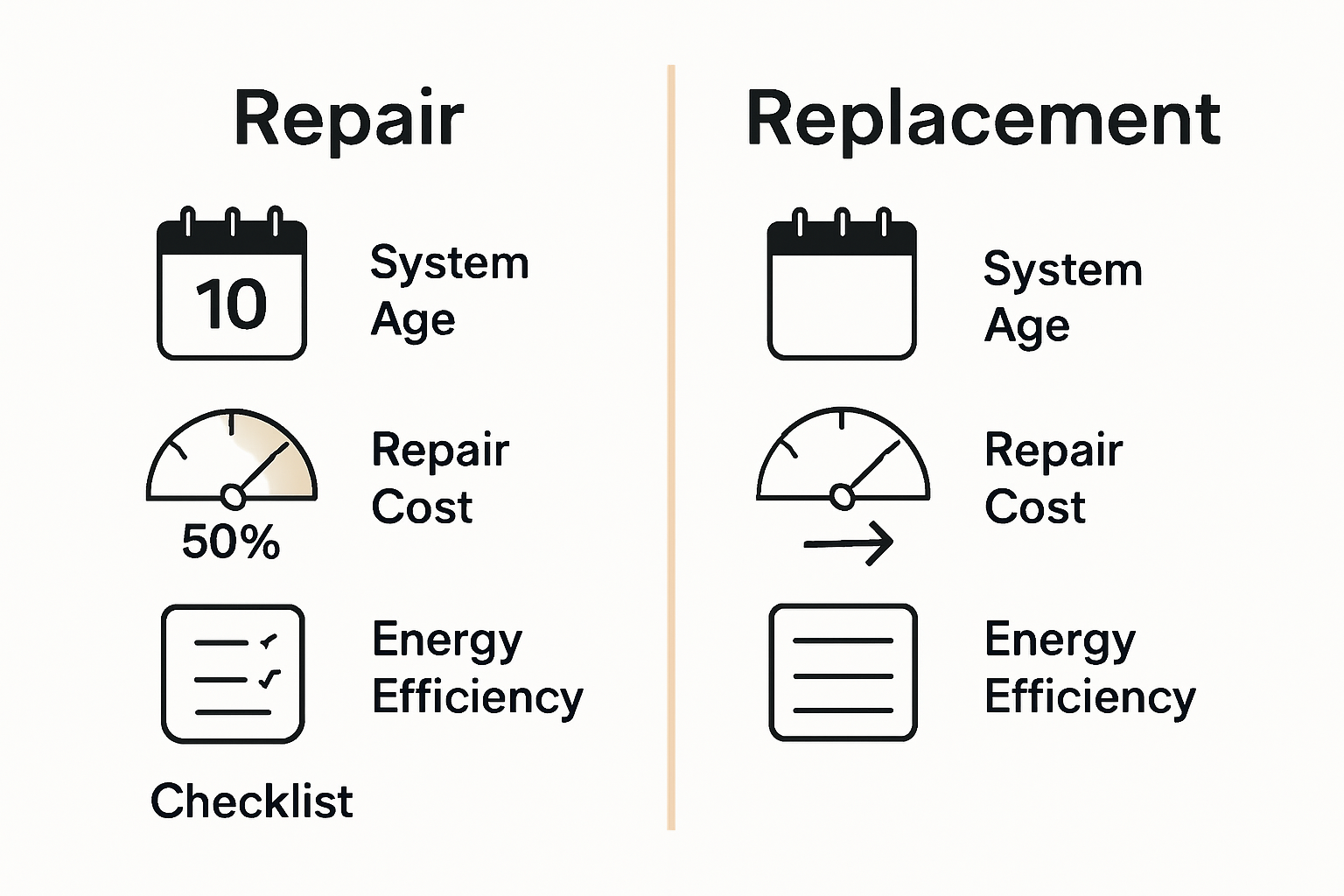
The decision-making process typically hinges on three primary considerations:
- System Age: Most HVAC systems last between 10-15 years. Units approaching or exceeding this range are prime candidates for replacement.
- Repair Cost: If repair expenses approach 50% of a new system’s cost, replacement becomes more economically sensible.
- Energy Efficiency: Newer models offer significantly improved efficiency ratings, potentially reducing monthly energy expenses by 20-40%.
Ultimately, the repair versus replacement choice isn’t just about immediate costs. It’s a strategic decision that impacts your home’s comfort, long-term financial health, and environmental footprint. By carefully assessing your specific situation and consulting with professional HVAC technicians, you can make an informed choice that balances short-term expenses with long-term benefits.
Types of HVAC Issues and Aging Signs
Understanding the warning signs of HVAC system deterioration is crucial for homeowners who want to maintain optimal comfort and prevent costly breakdowns. HVAC system aging isn’t just about calendar years, but a complex interplay of performance indicators that signal potential problems.
Research from MDPI reveals that aging HVAC systems experience progressive performance degradation, characterized by several key symptoms. These signs include increased energy consumption, reduced heating and cooling efficiency, and compromised indoor environmental quality.
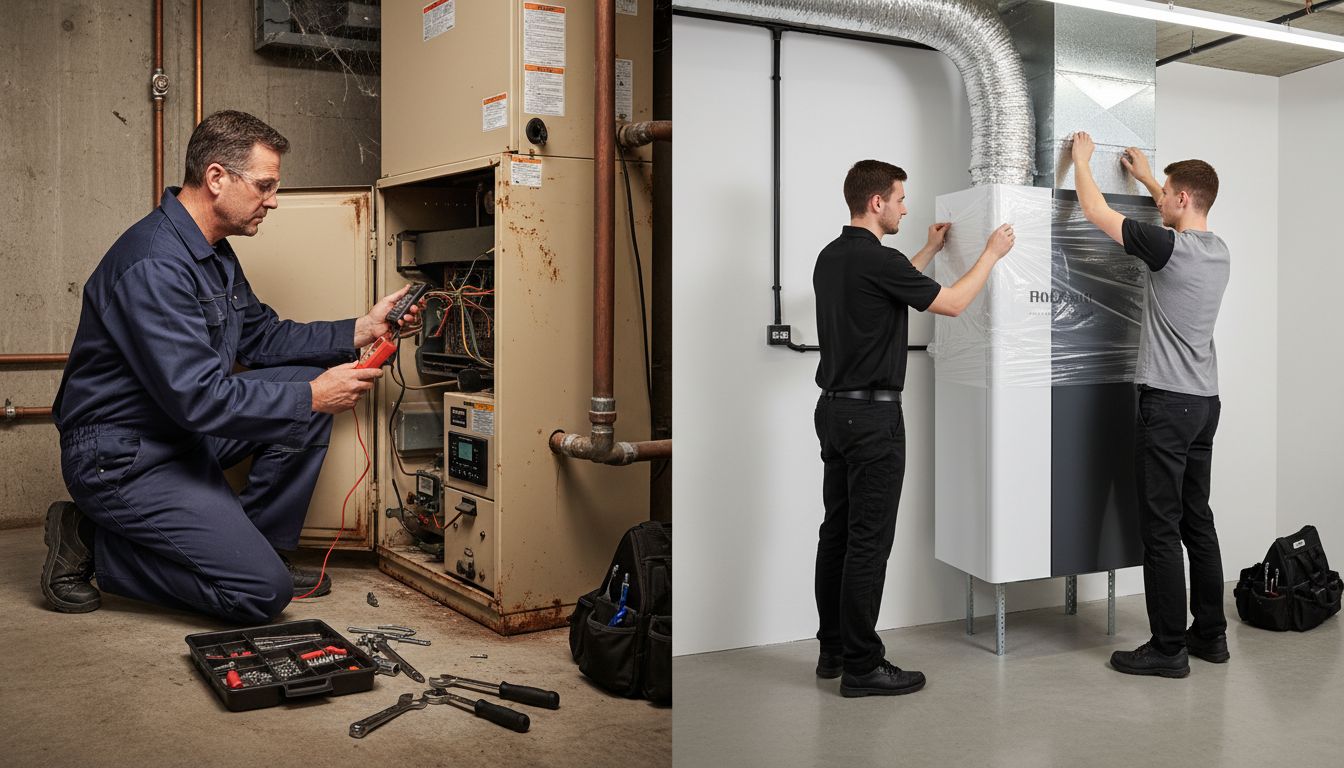 When a system begins to show these indicators, it’s a clear signal that professional assessment is necessary.
The most common types of HVAC issues related to aging include:
- Reduced Airflow: Diminishing air circulation that indicates potential ductwork or compressor problems
- Inconsistent Temperatures: Uneven heating or cooling across different rooms
- Unusual Noises: Grinding, squealing, or rattling sounds during operation
- Frequent Cycling: System turns on and off more frequently than normal
- Rising Energy Bills: Unexplained increases in monthly utility costs
Additionally, Iris Research highlights that system performance deterioration isn’t just about mechanical wear. It also encompasses the system’s decreasing ability to maintain consistent indoor temperatures and manage operational strain. Homeowners should pay close attention to these subtle changes, as early detection can prevent more extensive and expensive repairs down the line.
Cost Factors and Financial Implications
Deciding between HVAC repair and replacement is fundamentally a financial calculation that extends far beyond the immediate repair costs. Homeowners must consider a complex matrix of expenses that impact both short-term budgets and long-term financial planning.
Verdius Energy provides critical insights into the economic considerations of HVAC system management. Their analysis reveals that repair costs should be weighed against several key financial metrics, including potential energy savings, future maintenance expenses, and the system’s remaining operational lifespan.
Key financial considerations include:
- Repair Cost Threshold: If repair expenses exceed 50% of a new system’s cost, replacement becomes more economically sensible
- Energy Efficiency Savings: Newer systems can reduce monthly energy bills by 20-40%
- Maintenance Frequency: Older systems require more frequent and expensive repairs
- Potential Tax Credits: New energy-efficient systems may qualify for federal or state tax incentives
- Home Value Impact: Modern HVAC systems can increase property marketability
Beyond the immediate financial calculation, homeowners should consider the total cost of ownership. An aging system might seem less expensive to repair initially, but continuous maintenance, inefficient energy consumption, and potential emergency breakdowns can quickly erode any short-term savings.
Strategic replacement often proves more economical in the long run, providing improved comfort, reliability, and significant energy cost reductions.
System Lifespan and Energy Efficiency Impact
HVAC system lifespan is a critical factor that directly influences both performance and energy consumption. Understanding how aging affects your heating and cooling system can help homeowners make more informed decisions about maintenance and potential replacement.
Research from MDPI highlights the significant impact of system aging on overall energy consumption. The study reveals that HVAC systems gradually lose efficiency over time, with performance degradation becoming increasingly pronounced as the unit approaches the end of its operational lifecycle. This gradual decline means that older systems require more energy to produce the same cooling or heating output compared to newer, more technologically advanced models.
Key insights into system lifespan and energy efficiency include:
- Typical Lifespan: Most HVAC systems operate effectively for 10-15 years
- Efficiency Decline: Systems can lose up to 5% efficiency each year without proper maintenance
- Performance Indicators: Increased energy consumption, reduced cooling/heating capacity
- Maintenance Impact: Regular servicing can extend system life by 3-5 years
- Technology Advancement: Newer models offer up to 60% improved energy efficiency
Additionally, Iris Research emphasizes the importance of predictive maintenance strategies. By proactively monitoring system performance and addressing potential issues early, homeowners can significantly mitigate the efficiency losses associated with system aging. This approach not only extends the system’s operational life but also helps maintain optimal energy performance, ultimately reducing long-term operational costs and environmental impact.
How to Decide: Repair or Replace in L.A.
For Los Angeles homeowners, the decision to repair or replace an HVAC system involves careful consideration of multiple factors unique to the region’s demanding climate and energy landscape. Climate-specific challenges play a significant role in determining the most cost-effective and efficient approach to HVAC maintenance.
Verdius Energy provides a comprehensive decision-making framework specifically tailored to help homeowners navigate this critical choice. The analysis suggests evaluating several key parameters that are especially relevant to Los Angeles residents, including system age, cumulative repair costs, and the potential energy savings offered by modern, more efficient units.
Critical decision-making criteria for L.A. homeowners include:
- Age Threshold: Systems over 10 years old typically warrant replacement consideration
- Repair Cost Ratio: If repair costs exceed 50% of a new system’s price
- Energy Efficiency: Potential for 30-50% reduction in cooling expenses
- Climate Impact: High-temperature summers increase system strain
- Local Rebates: Los Angeles offers specific energy-efficiency incentives
Ultimately, the decision transcends simple financial calculations. Los Angeles homeowners must consider the unique environmental demands of the region, including intense summer heat, potential energy price fluctuations, and the long-term comfort and reliability provided by a well-chosen HVAC system. Explore our examples of HVAC repairs to gain deeper insights into making this critical home improvement decision.
Make the Right Choice for Your HVAC Needs Today
Facing the tough decision between HVAC repair and replacement can feel overwhelming. As the article explains, factors like system age, repair costs, and energy efficiency all play a critical role. Maybe you have noticed rising energy bills or uneven cooling in your home. These are signs that demand prompt attention. Understanding these pain points is the first step toward restoring your comfort and preventing unexpected breakdowns.
Don’t let guesswork add to your stress. At airconditioning-heating.com, we connect Los Angeles homeowners with trusted local experts who specialize in timely repairs and professional system replacements. Whether your system needs a simple fix or you are ready to upgrade to a more efficient model, you can rely on our network to guide you through every step.
Act now to protect your home and reduce costly energy bills. Explore detailed examples of HVAC repairs and discover how our recommended contractors can deliver fast, affordable service tailored for the Los Angeles climate.

Don’t wait until a small issue turns into a major expense. Visit airconditioning-heating.com today and find the right local HVAC professional who will help you decide if it’s best to repair or replace your system based on your needs and budget.
Frequently Asked Questions
What factors should I consider when deciding between HVAC repair and replacement?
Key factors include the system age, repair costs relative to the cost of a new unit, and potential energy efficiency improvements. If repairs approach 50% of a new system’s cost, replacement may be the better option.
How long do most HVAC systems last before needing replacement?
Most HVAC systems typically last between 10 to 15 years. If your system is approaching or exceeding this age, it’s wise to consider a replacement.
What are the common signs that my HVAC system may need to be replaced?
Common signs include reduced airflow, inconsistent temperatures, unusual noises during operation, frequent cycling, and rising energy bills as the system ages.
How does energy efficiency impact my decision to repair or replace my HVAC system?
Newer HVAC models often offer 20-40% better energy efficiency than older units, resulting in lower monthly energy bills. This potential savings should be considered when deciding whether to repair or replace.

