
Nearly 90 percent of homeowners deal with HVAC issues caused by skipped maintenance. Keeping your heating and cooling system in top shape not only protects your investment but also helps lower energy bills and prevents sudden breakdowns. With the right tools and simple steps, you can handle basic upkeep yourself and avoid expensive repairs while making sure your home stays comfortable all year.
Table of Contents
- Step 1: Gather Essential HVAC Maintenance Tools And Supplies
- Step 2: Shut Off Power And Inspect Unit Exteriors
- Step 3: Clean Or Replace Air Filters And Vents
- Step 4: Check Condensate Drains And Duct Connections
- Step 5: Test System Performance And Safety Features
Quick Summary
| Key Point | Explanation |
|---|---|
| 1. Gather essential HVAC tools | Collect professional tools like screwdrivers, pliers, and PPE for effective maintenance and safety. |
| 2. Always shut off power first | Disconnect power before inspecting or cleaning HVAC units to prevent electrical hazards and ensure safety. |
| 3. Clean or replace air filters regularly | Check air filters monthly and replace if dirty to improve efficiency and air quality, prolonging system life. |
| 4. Inspect drains and duct connections | Regularly check drain lines for blockages and ductwork for leaks to maintain optimal system performance. |
| 5. Test system performance thoroughly | After maintenance, ensure the HVAC system operates correctly in heating and cooling modes and check for safety features. |
Step 1: Gather essential HVAC maintenance tools and supplies
Before diving into HVAC maintenance, you will need to collect a comprehensive set of professional tools. According to cbt.edu, successful maintenance requires specific equipment that ensures both effectiveness and safety.
Your essential toolkit should include insulated screwdrivers, hammers, adjustable pliers, pipe wrenches, tape measures, and a reliable multimeter. uti.edu also emphasizes the critical importance of personal protective equipment (PPE), which means adding safety glasses, work gloves, and protective footwear to your arsenal. Additional must-have tools include extension cords, a cordless drill, tin snips, and a sturdy step ladder.
Pro tip: Invest in high-quality tools with comfortable grips and durable construction. Cheap tools might save money upfront but can compromise your work quality and potentially create safety risks during maintenance. Organize your tools in a professional toolbox or bag to keep everything accessible and protected, setting the stage for efficient and professional HVAC maintenance work.
Step 2: Shut off power and inspect unit exteriors
Safety comes first when performing HVAC maintenance. Energy Star recommends completely shutting off power to your HVAC system before beginning any inspection or cleaning work to prevent potential electrical hazards.
Locate your system’s main electrical circuit breaker and switch it to the off position. For outdoor units, this means turning off the dedicated circuit at your main electrical panel. Once power is disconnected, carefully inspect the exterior of both indoor and outdoor units. Look for signs of damage such as dents, rust, or debris accumulation around the condenser unit. Indiana Connection suggests using a garden hose to gently spray the outdoor condenser coils, removing pollen, dirt, and small debris that might obstruct airflow.
Warning: Never attempt to clean or service electrical components while the system is powered. Always use caution and wear protective gloves when handling equipment. If you notice significant damage or are uncomfortable with any part of the inspection, it is best to contact a professional HVAC technician who can safely assess and address potential issues.
Step 3: Clean or replace air filters and vents
Energy Star recommends monthly inspection and cleaning of air filters as a critical component of HVAC maintenance. Dirty filters can significantly impact your system’s efficiency and indoor air quality, potentially increasing energy costs and risking equipment damage.
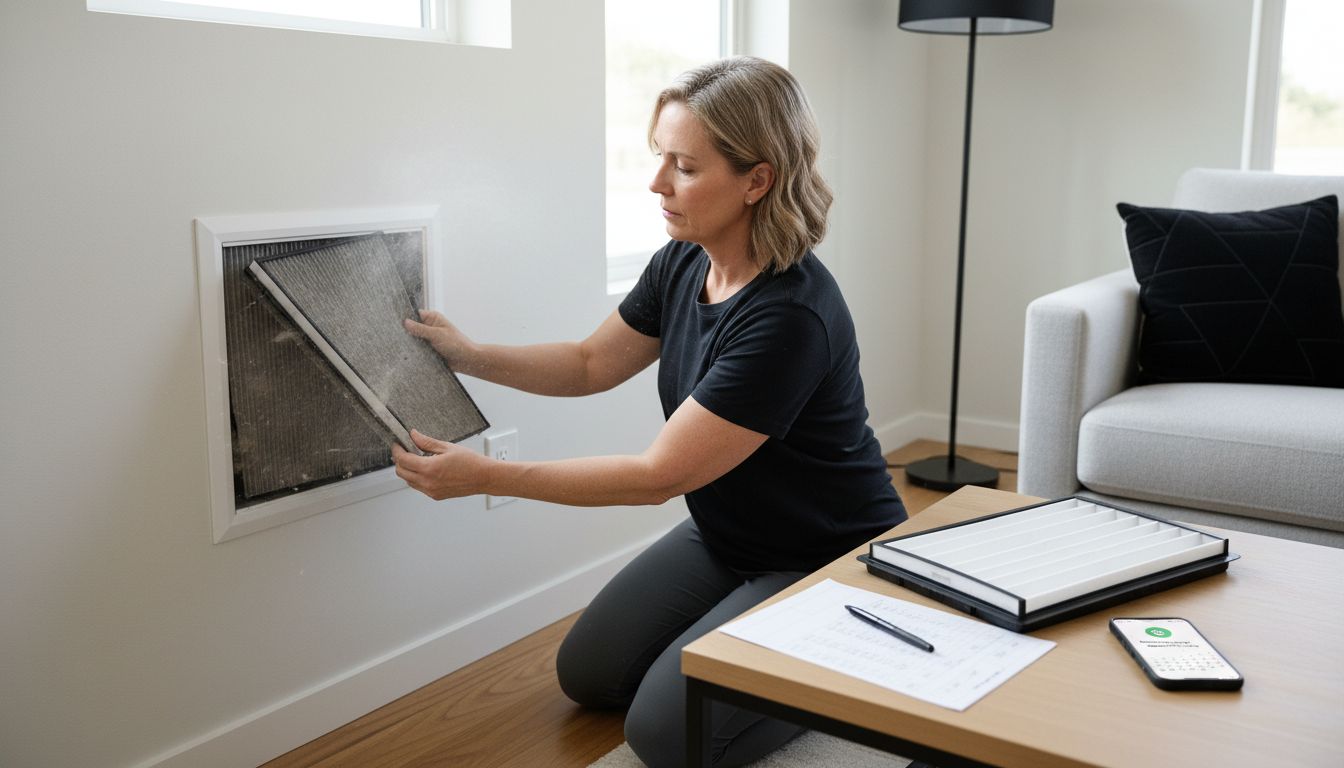
Begin by locating your system’s air filter typically found near the return air duct or inside the air handler unit. Carefully remove the existing filter and check its condition. According to BSE Energy Services, filters play a crucial role in trapping pollutants and protecting your HVAC motor. If the filter appears clogged with dust, pet hair, or debris, it needs replacement. When installing a new filter, ensure you match the size precisely and observe the airflow direction arrow to guarantee proper installation.
Pro tip: Keep a log of filter replacement dates and set a recurring calendar reminder. Some filters require replacement every 30 to 90 days depending on your home’s air quality, pet presence, and overall environmental conditions. This simple maintenance step can help extend your HVAC system’s lifespan and maintain optimal performance.
Step 4: Check condensate drains and duct connections
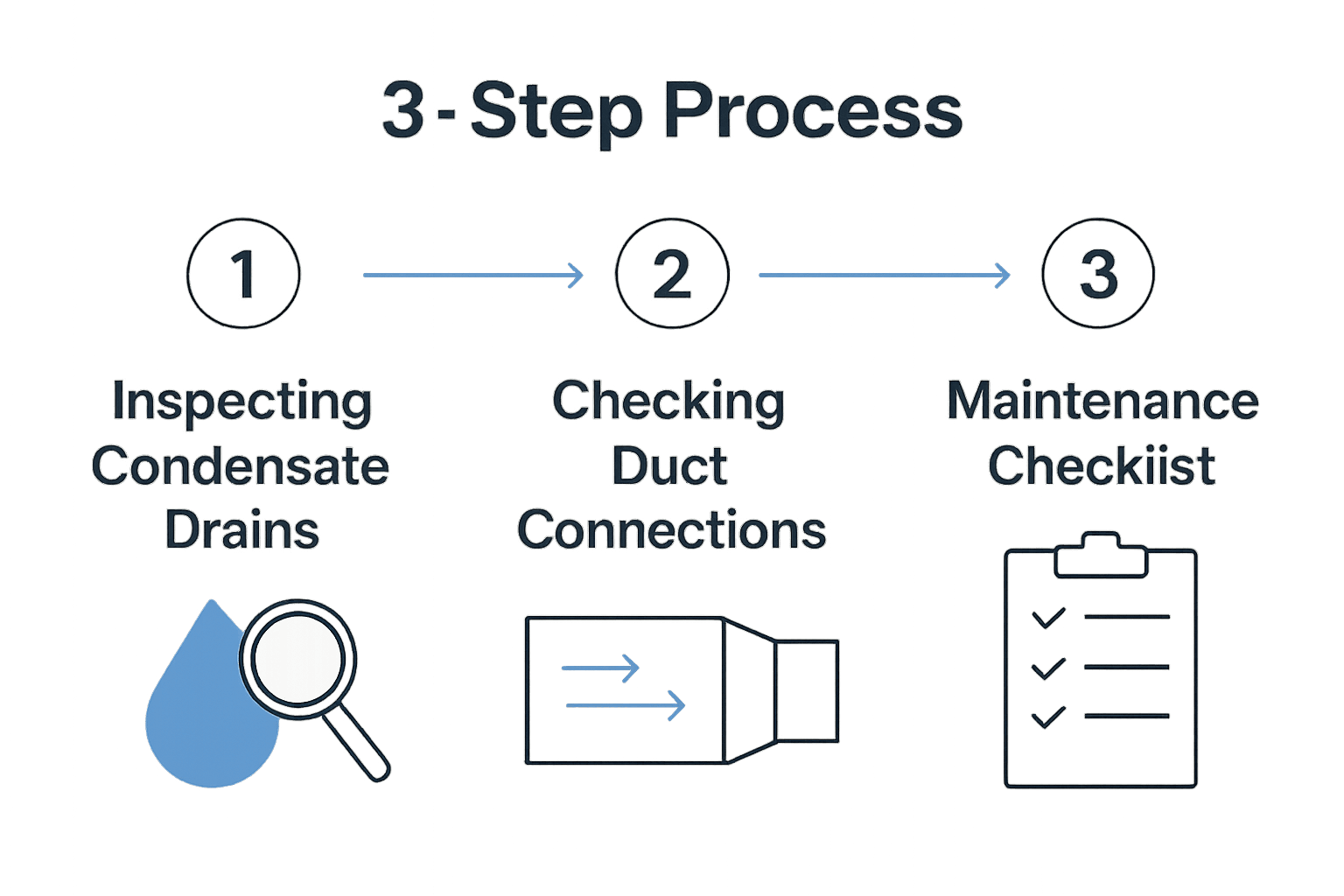
Energy Star emphasizes the critical importance of inspecting condensate drains and duct connections as part of comprehensive HVAC maintenance. These components play a crucial role in your system’s overall efficiency and performance, preventing potential water damage and maintaining optimal indoor air quality.
Locate the condensate drain line typically found near your indoor air handling unit. Carefully inspect the drain for any signs of blockage, algae growth, or standing water. According to WBDG, a properly functioning condensate drain is essential to prevent system short-cycling and potential water damage. Use a wet vacuum or specialized drain cleaning solution to remove any clogs. Next, examine your ductwork for visible leaks, loose connections, or areas with compromised insulation. Run your hand along duct seams to feel for air escaping and check for any signs of dust accumulation that might indicate air leakage.
Warning: If you discover significant blockages, extensive duct damage, or are unsure about performing repairs, contact a professional HVAC technician. Small maintenance issues can quickly escalate into costly repairs if left unaddressed. Regular inspections and prompt attention to condensate drain and duct issues will help maintain your system’s efficiency and extend its operational lifespan.
Step 5: Test system performance and safety features
Energy Star recommends a comprehensive system performance test to ensure your HVAC unit operates safely and efficiently. This critical step helps identify potential issues before they become costly repairs and guarantees your system will provide reliable comfort throughout the year.
Begin by turning the power back on and setting your thermostat to test both heating and cooling modes. According to WBDG, calibrating your thermostat and checking system controls are essential for maintaining peak efficiency. Listen carefully for unusual sounds during startup and monitor the system’s cycling. Check that the unit starts smoothly, maintains consistent temperatures, and shuts off without unexpected delays or strange noises. Verify that all safety features are functioning correctly, including emergency shutoff mechanisms and temperature limit controls.
Warning: If you notice any irregular performance such as short cycling, inconsistent temperatures, or unusual sounds, do not attempt extensive repairs yourself. These could indicate more serious underlying issues that require professional diagnosis. Contact a licensed HVAC technician who can perform a detailed assessment and address any potential problems safely and effectively.
Keep Your HVAC System Running Smoothly With Trusted Local Experts
Maintaining your HVAC system with simple steps like filter replacement, condensate drain checks, and performance testing can prevent costly breakdowns and protect your comfort all year long. But if you spot any signs of damage, unusual noises, or clogged components during your preventative maintenance routine, acting quickly is crucial to avoid interruptions and rising energy bills. These challenges demand professional expertise to ensure your equipment stays safe, efficient, and reliable, especially with Los Angeles summers pushing systems to their limits.

Take control of your HVAC care today by connecting with licensed local contractors through airconditioning-heating.com. Our platform links you to skilled professionals ready to handle repairs, thorough maintenance, or system upgrades with prompt, trustworthy service. Don’t wait for minor issues like dirty filters or blocked drains to become emergency repairs. Visit airconditioning-heating.com now to find trusted help and keep your home or business comfortable all year. For more tips on protecting your system, explore our resources at airconditioning-heating.com. Act now to safeguard your HVAC investment and enjoy peace of mind.
Frequently Asked Questions
What tools do I need for preventative HVAC maintenance?
You will need a comprehensive set of tools, including insulated screwdrivers, adjustable pliers, and a reliable multimeter. Gather these tools, along with personal protective equipment like safety glasses and gloves, to ensure effective and safe maintenance.
How often should I check or replace my HVAC air filters?
Inspect your air filters monthly and replace them every 30 to 90 days if they appear clogged with dust or debris. Keeping track of replacement dates can help maintain your system’s efficiency and improve indoor air quality.
What should I do if my condensate drain is blocked?
If you notice a blockage in your condensate drain, use a wet vacuum or a specialized cleaning solution to clear it. Regularly inspect your drain to prevent standing water, which can lead to water damage and reduced efficiency.
How can I test my HVAC system’s performance after maintenance?
To test your HVAC system, turn the power back on and set your thermostat to both heating and cooling modes. Monitor its operation for unusual sounds or irregular cycling, and confirm that it maintains consistent temperatures.
Why is it important to shut off power before inspecting my HVAC system?
Shutting off the power to your HVAC system prevents electrical hazards during inspection and cleaning. Always locate the main electrical circuit breaker and switch it off to ensure your safety while working on the unit.
What should I do if I discover significant damage to my HVAC system during maintenance?
If you find major damage or are uncomfortable with any part of the inspection, contact a professional HVAC technician for a thorough assessment. Addressing issues promptly can help prevent costly repairs and ensure reliable comfort throughout the year.

